Revolutionary Edinburgh
2 July 2026
Craig Kerr from the castle guiding team looks at how the American and French Revolutions shaped Edinburgh.
The Month of Revolution
This upcoming July marks the 250th anniversary of the American Revolution. A number of those American rebels were locked up as traitors in Edinburgh Castle on that first 4th July in 1776. Times have now changed as we welcome many of our American friends into the castle every day. The United States is not alone in celebrating this July. Their ally France would shortly follow with a revolution of their own in July of 1789.
July marks the foundations of two nations, both of which began as enemies of the British government and whose sailors were kept as prisoners within Edinburgh Castle. Ironically, all of them would become close friends and allies barely a century later. Nowadays many people from the USA and France travel vast distances to see where their fellow patriots were once held as prisoners.
The events of the American and French Revolutions are well known. However, what is often overlooked is the impact they had on the people of Edinburgh. This time we will look at not just the conditions the prisoners lived in, but how their fight would influence the very people they once fought against. In time, they themselves would begin questioning authority and start a fight for their own rights.
Prisoners of War
During the American Revolution, the Patriots found themselves at a disadvantage against the British Royal Navy. It was one of the largest military powers in the world at the time. The Continental Congress could not raise a fleet to match it. They had to rely on hiring privateers and turning to the other great powers of Europe for help. Several nations such as France, Spain and the Netherlands would heed this call to arms and send fleets of ships to the Americas.
Some of these European ships were captured. Their crews were incarcerated until either the war was over or until they needed to be exchanged for the release of British sailors. Edinburgh Castle alone would be packed with around 1,000 prisoners by 1781.
Although these sailors were sent to the same prison, they would be separated into two very different worlds. If you were a French, Dutch or Spanish sailor you were treated well. After all, as far as the British government was concerned you were only fighting for King and Country, similarly to British soldiers and sailors. The prisoners would be provided with free beer, bread, beef, pork, cheese and beans. However, the Americans were considered rebels and traitors to the Crown and were only given half rations.
Thankfully for the prisoners, the America Revolutionary War would end with the Treaty of Paris in 1783. The USA was now officially recognized as a new nation. All prisoners were released; but it would not be the last time the prisons at Edinburgh Castle would be full. Just as one revolution ended another began. The prisons would hold French prisoners again but this time, from the French Revolutionary and Napoleonic wars. The prisoners were still entitled to the same rights as before with little change.
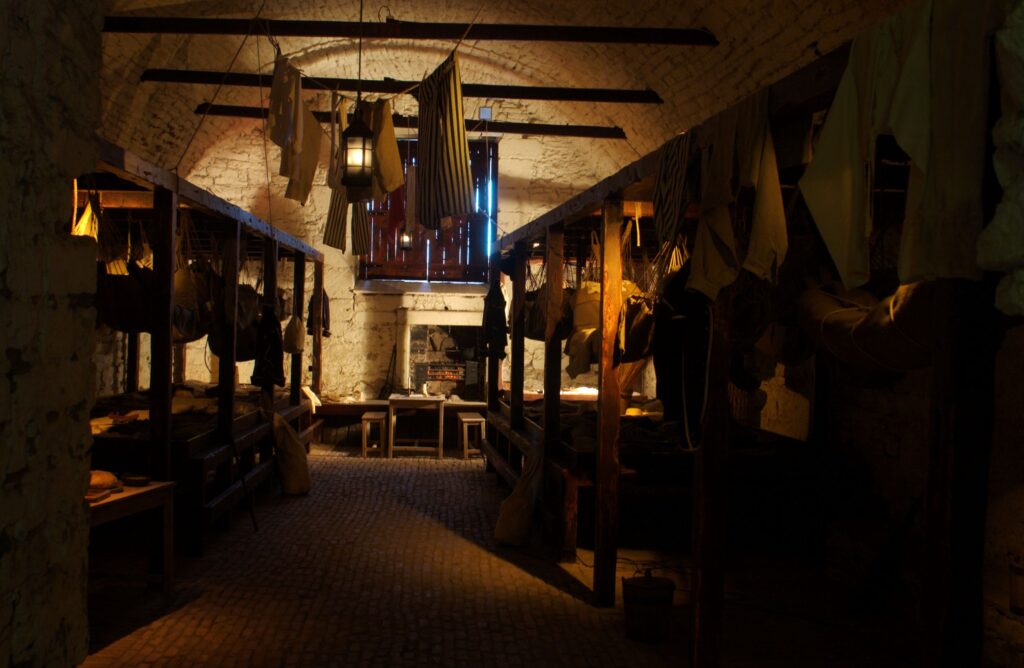
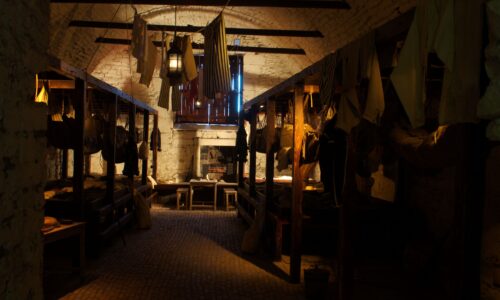
The Prisons in Edinburgh Castle where the French Sailors were kept.
JacoBINS not JacoBITES
Upon visiting Hawk Hill in Edinburgh Castle, you will find the New Barracks that were built between 1796 and 1799. These were constructed due to the fear of Napoleon invading the British Isles. It’s possible the threat of another Jacobite uprising also played its part. Many might be familiar with the Jacobite risings of the late 1600s to the mid 1700s. However, their cause to restore the absolutist Stuart dynasty was long at an end by the time the New Barracks were built. Now, the people of Britain would not rise up for a king or a dynasty but for themselves.
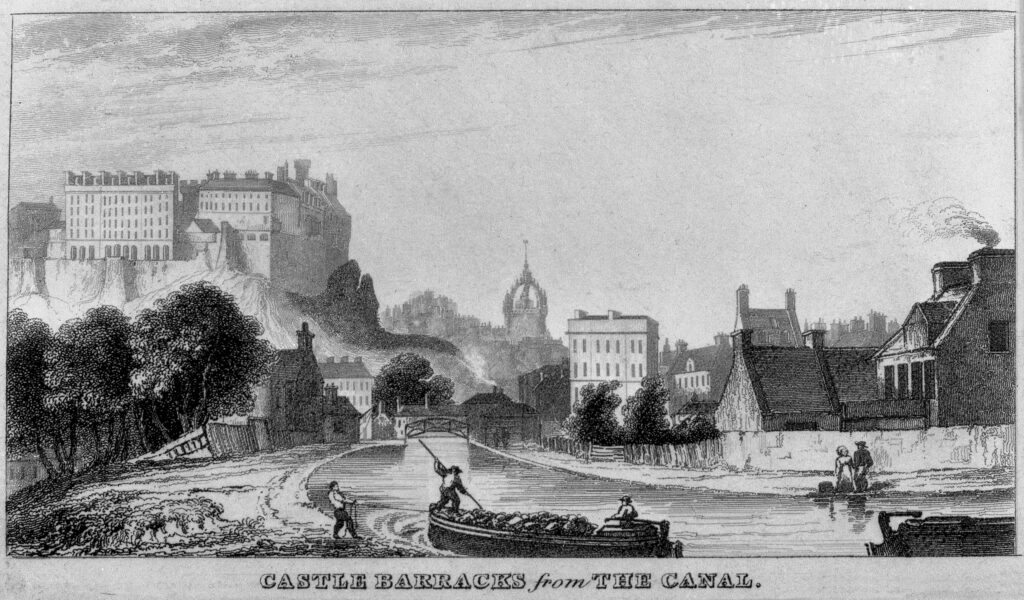
Engraving showing view of Castle Barracks from the Union Canal, Edinburgh. Courtesy of HES (Illustrations from ‘Plan of the City of Edinburgh and its vicinity’, Robert Hamilton, 1827). View on Trove.scot
Inspired by the revolutionaries of America and France, the people campaigned for better rights for all civilians throughout British cities. Whether it was through protests on the streets or legislation in Parliament, one thing was clear: ordinary citizens wanted change. In the 1790s, some in Britain followed the example of the Jacobin Club in France. They formed their own movement The Society of the Friends of the People. They called for more rights for citizens, such as universal suffrage and equal rights for all.
The Society of the Friends of the People had many supporters throughout Scotland and England. They ranged from ordinary citizens such as shopkeepers and artisans, to lawyers such as Thomas Muir. Support also extended to Parliament where there were supportive MPs such as Charles James Fox and the one of Scotland’s legendary fighters on the high seas, Thomas Cochrane.
Despite the government building new barracks in Edinburgh Castle, the people (some of whom were veterans who fought against the American and French Revolutionaries) began to ask, “Why shouldn’t we have the same rights as them?”. After all, Edinburgh had been the very centre of the Scottish Enlightenment a few decades previously. Figures such as David Hume and Adam Smith influenced the key players of both Revolutions. It seems what goes around comes around.
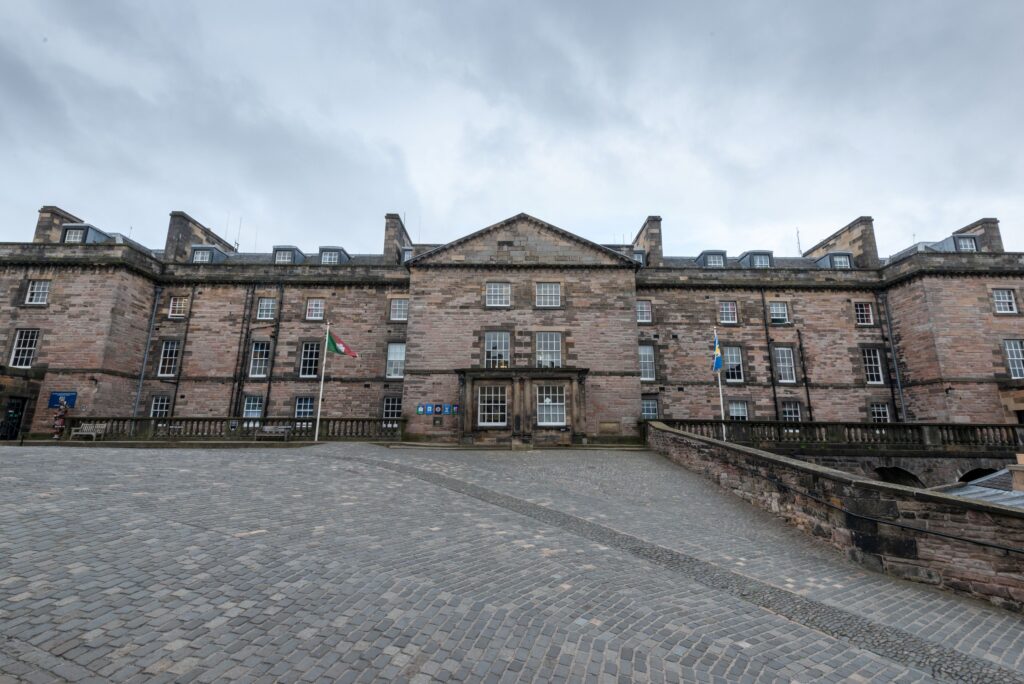
The New Barracks in Edinburgh Castle, constructed between 1796-99 during the French Revolutionary Wars.
Calton Hill: One hill with two sides of the story
When you look north-east from Mill’s Mount at Edinburgh Castle, you will be presented with an amazing view. One of the spectacular sites that you will observe is the National Monument on Calton Hill. This monument is dedicated to all Scottish soldiers and sailors who died fighting in the French Revolutionary and Napoleonic Wars.
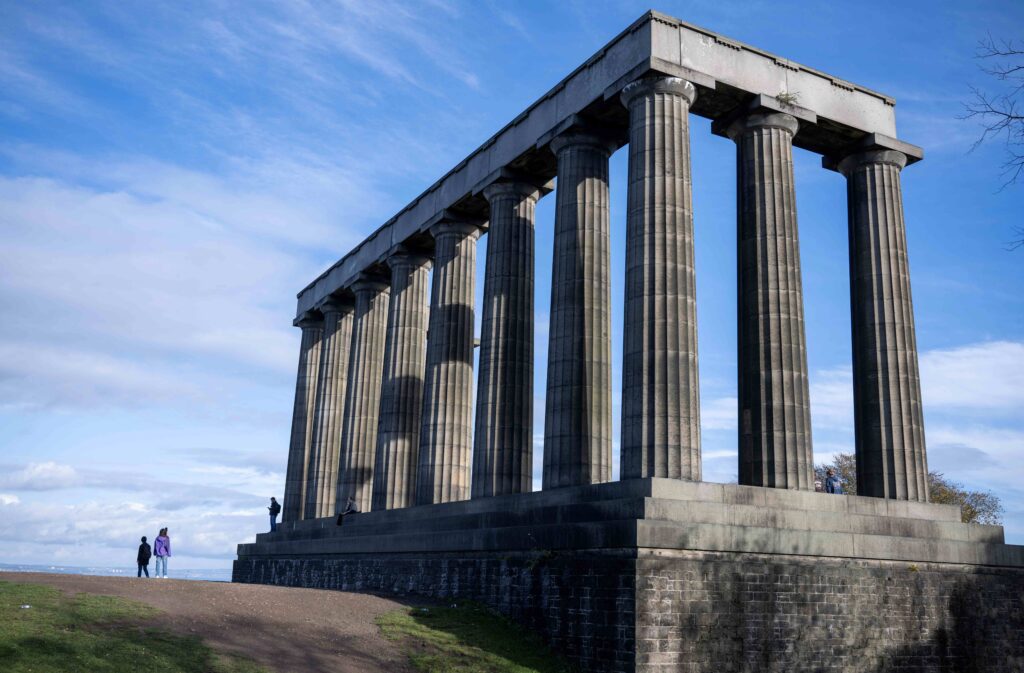
The National Monument.
What you do not see on Calton Hill is the Political Martyr’s Monument, in Calton Old Burial Ground. The monument is dedicated to those who fought for reform in Scotland and England, which includes the previously mentioned Thomas Muir, a Lawyer from Glasgow. Muir himself carried out campaigns throughout Scotland for better rights for all and was sentenced to 14 years in Australia in 1793. He would escape and live out his last days in Revolutionary France where he passed away in 1799.
Calton Hill is a great example of how we see both sides of the story. On one side we see the National Monument built in the 1820s commemorating the soldiers and sailors who fought against the French Revolution. On the other hand, there is a monument dedicated to those who embraced the ideals of the Revolution, erected by The Friends of Parliamentary Reform in England and Scotland in 1844. It clearly shows that both Revolutions influenced us in different ways.
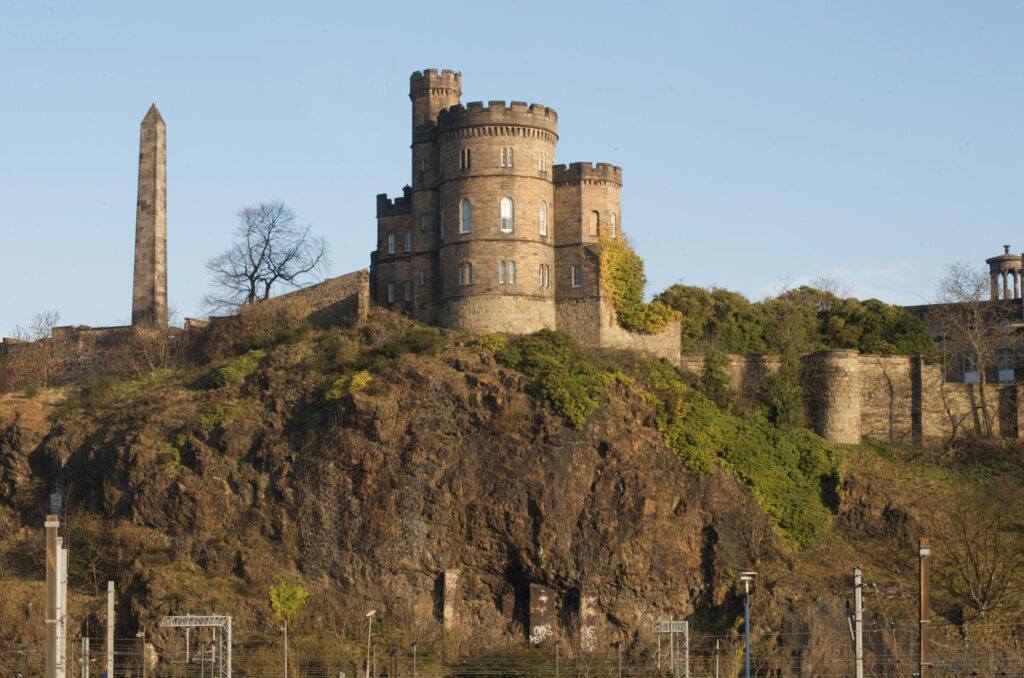
The Political Martyrs’ Monument seen from below (on the left).
What was the impact of these Revolutions in Scotland?
The American and French Revolutions have influenced movements throughout the world, even here in Scotland. Just look at the radical Scottish MP and sea captain Thomas Cochrane. He may have fought against Napoleon and some aspects of the French Revolution. However, he would go on to fight against corruption in the House of Commons at home. He then helped lead the charge to liberate Peru, Chile and Brazil from the Spanish and Portuguese Empires, in their own revolutions.
Edinburgh itself would become the seat of one of Britain’s most radical reforming Prime Ministers of the Victorian Age, William Gladstone. Although he himself was born in Liverpool, he needed Edinburgh’s radical support in his quest to improve society for everyone, as seen in his famous Midlothian campaign.
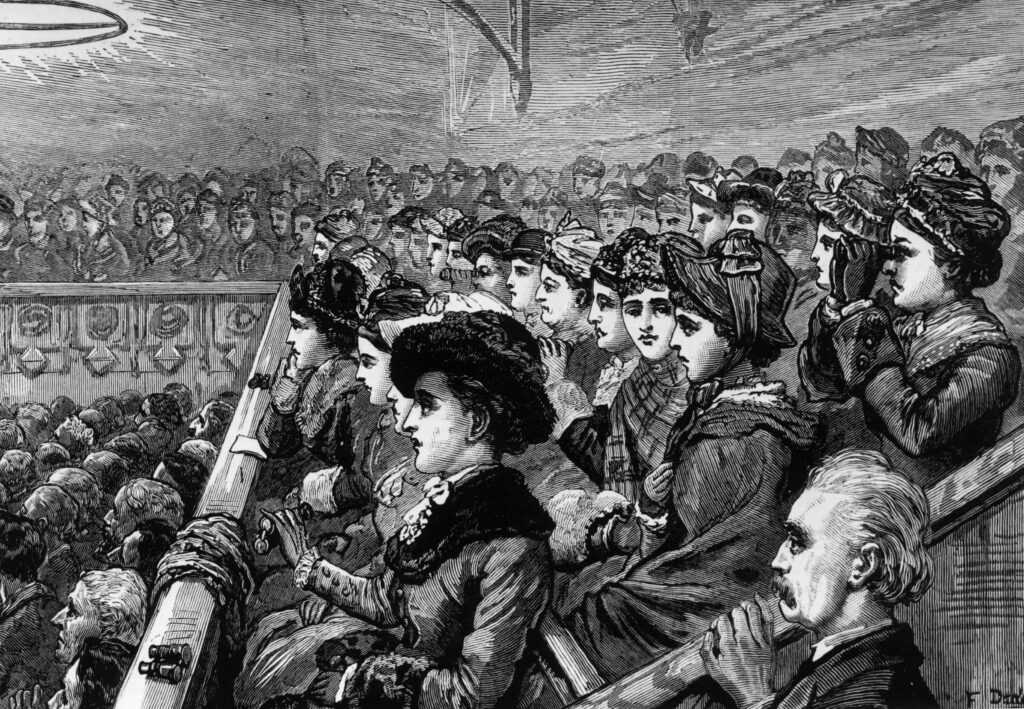
Ladies at the Edinburgh Corn Exchange listening to William Gladstone’s speech, 1879. Licensed by Hulton Getty vis SCRAN. View on Trove.scot
How can we assess the full impact of these Revolutions on Edinburgh, on Scotland, on Britain, and on the world? Maybe it is too early to tell. The call for change has been a chorus with many voices over the centuries, be it the Society of the Friends of the People in the late 18th century, Gladstone’s Midlothian Campaign in the late 19th century, the Suffragettes in the early 20th century or related movements. These movements echo the ghosts of those ordinary people once held in the prisons of Edinburgh Castle and in the streets, fighting for Liberty, Equality, and Fraternity. For Revolution!
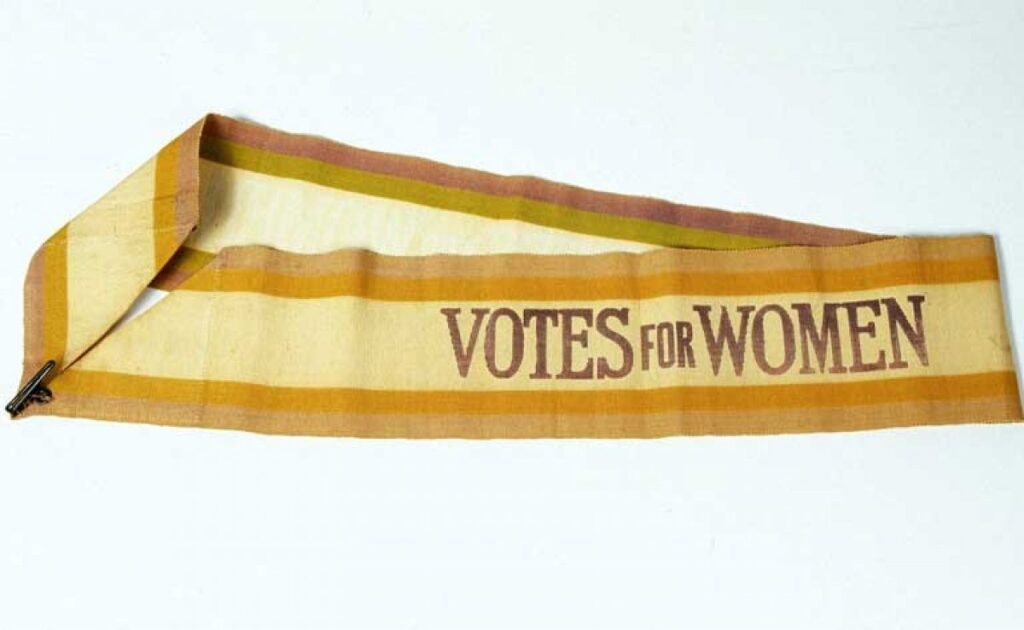
Collar which may have been worn by an Edinburgh member of the Women’s Social and Political Union (WSPU). Licensed by East Lothian Museums Service via SCRAN. Copyright: The City of Edinburgh Museums and Galleries via SCRAN. View on Trove.scot